Strengthening TVET in The Gambia

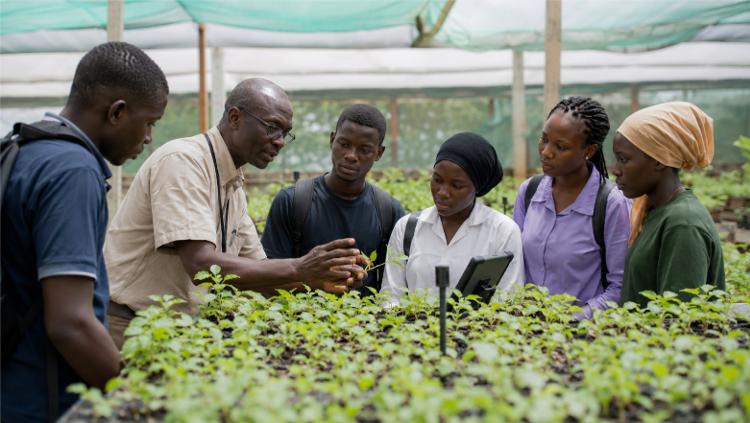
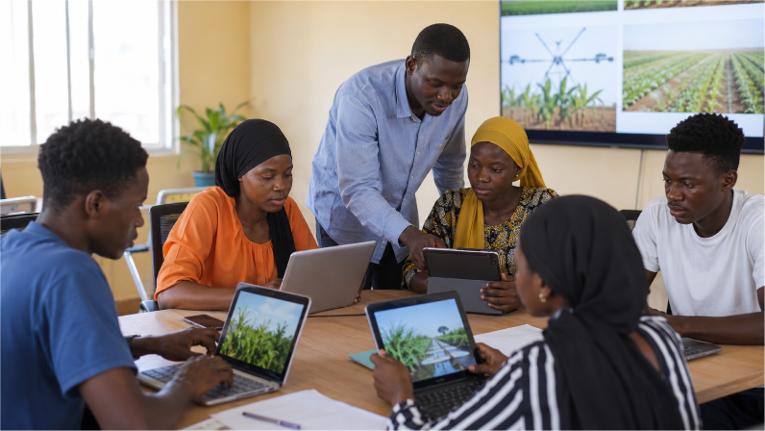
As The Gambia continues to address challenges related to youth employment, economic development, and climate change, Technical and Vocational Education and Training (TVET) has an increasingly important role to play in preparing people for the jobs and opportunities of the future. TVET equips learners with practical skills and competences that respond directly to labour market needs. By combining technical knowledge with hands-on experience, it helps bridge the gap between education and employment while supporting innovation and entrepreneurship across different sectors of the economy. In The Gambia, the need for a strong and responsive TVET system is particularly significant. With a young and growing population, creating pathways to meaningful employment is essential for sustainable development. At the same time, key sectors such as agriculture are undergoing rapid transformation as they adapt to climate change, technological innovation, and evolving market demands. To respond effectively to these changes, vocational education must also evolve. Training programmes need to reflect emerging skills needs, integrate digital tools, promote innovative teaching methods, and strengthen links with employers and industry. Educators play a central role in this process, ensuring that learners acquire the knowledge, practical experience, and entrepreneurial mindset required in today’s labour market. This is where AGREEN Gambia aims to make a difference. The project seeks to strengthen the capacity and relevance of the TVET system by supporting educators, fostering collaboration between training institutions and industry, and promoting the integration of Climate-Smart Agriculture into vocational education. Through new learning resources, innovative training approaches, and stronger partnerships, the project will contribute to building a more modern, inclusive, and future-oriented TVET ecosystem.

AGREEN Gambia project officially launches in Banjul

The AGREEN Gambia project was officially launched in Banjul, bringing together representatives from government institutions, vocational education providers, the private sector, international partners, and development organisations committed to strengthening skills development and sustainable agriculture in The Gambia. The launch marked the beginning of a 30-month Erasmus+ Capacity Building in VET initiative aimed at enhancing the capacity and relevance of Technical and Vocational Education and Training (TVET) to support the transition towards Climate-Smart Agriculture (CSA), sustainable rural development, and improved employment opportunities for young people and women. The launch event formed part of a three-day kick-off meeting held from 15 to 17 April 2026, during which project partners worked together to define priorities, coordinate upcoming activities, and establish the foundations for successful collaboration. Discussions focused on key project actions, including the creation of a Gambia-EU Community of Practice, stronger cooperation between TVET institutions and employers, the development of innovative training resources, and the design of a national reference curriculum on Climate-Smart Agriculture. Hosted by the Ministry of Youth and Sports through the Gambia Songhai Initiative, the event highlighted the crucial role of skills development in addressing some of the country’s most pressing challenges. Speaking during the launch, EU Deputy Head of Mission Raphael Brigandi described vocational education as “an opportunity, resilience, and empowerment”, underlining its importance in supporting sustainable development and creating pathways to employment for young people. With agriculture providing livelihoods for a large share of the population, stakeholders emphasised the need to equip learners, educators, and entrepreneurs with the skills required to respond to climate change and support the modernisation of the sector. Lamin Camara, Deputy Permanent Secretary at the Ministry of Youth and Sports, highlighted that AGREEN Gambia will contribute to strengthening the country’s TVET system through innovative teaching approaches, digital learning tools, and closer links between education and employment. The project will focus on improving the quality and relevance of vocational education, promoting Climate-Smart Agriculture, fostering collaboration between training providers and industry, and expanding opportunities for youth and women in rural communities. As noted by AGREEN Gambia Project Coordinator Jesús Boyano, the initiative is fully aligned with national priorities on climate adaptation and social inclusion, while drawing on innovative European approaches to excellence in vocational education. Beyond the official launch, partners also visited key national stakeholders involved in youth development, entrepreneurship, and education, reinforcing the collaborative spirit that will guide the project throughout its implementation. By bringing together expertise from The Gambia, Spain, Croatia, and Ireland, AGREEN Gambia aims to strengthen the connection between education, agriculture, and employment, helping to build a more resilient, inclusive, and sustainable future for communities across the country. The official launch of AGREEN Gambia received positive media coverage in The Gambia, helping raise awareness of the project’s goals and expected impact. The articles highlighted the importance of strengthening TVET, fostering Climate-Smart Agriculture, and supporting youth employability and entrepreneurship through innovative skills development initiatives. Further coverage of the launch event can be found in:

Why Climate-Smart Agriculture matters

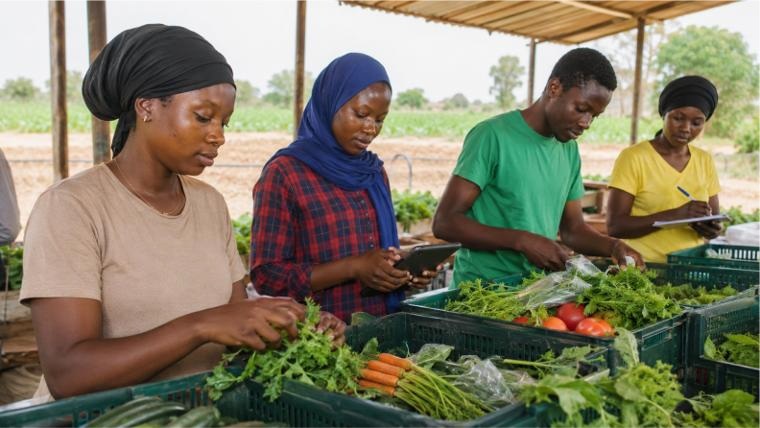
Agriculture is at the heart of life in The Gambia. It provides livelihoods for more than 70% of the population and plays a vital role in food production, employment, and rural development. Yet the sector is facing growing challenges. Rising temperatures, unpredictable rainfall, soil degradation, and increasingly frequent floods and droughts are making it harder for farmers to maintain productivity and secure their incomes. In this context, Climate-Smart Agriculture (CSA) is emerging as a key solution to help farming communities adapt to a changing climate while improving food security and economic opportunities. Rather than a single farming technique, Climate-Smart Agriculture is an approach that promotes more sustainable and resilient agricultural practices. It combines methods such as efficient water management, soil conservation, crop diversification, agroforestry, climate-resilient crops, and the use of innovative technologies to help farmers increase productivity while protecting natural resources. For The Gambia, the need for this transition is becoming increasingly urgent. Agriculture remains largely dependent on rainfall, while less than 3% of farmland is irrigated. At the same time, climate change is disrupting traditional farming cycles, reducing yields, and increasing pressure on already fragile ecosystems. These challenges affect not only agricultural production but also food security, rural livelihoods, and long-term economic development. By adopting more resilient farming practices and integrating innovation into agricultural production, farmers can improve yields, make better use of natural resources, and reduce their vulnerability to climate shocks. At the same time, the transition towards greener agricultural systems creates new opportunities for entrepreneurship, employment, and local economic growth. However, achieving this transformation requires more than technology alone. It also depends on people having the right knowledge and skills. This is why education and training play such an important role in supporting sustainable agriculture. The AGREEN GAMBIA project has been designed to help address this challenge by strengthening the capacity of the Technical and Vocational Education and Training (TVET) system to support the transition towards Climate-Smart Agriculture. By investing in skills, innovation, and sustainable farming practices, AGREEN GAMBIA aims to help build a more resilient agricultural sector capable of responding to climate challenges while creating new opportunities for communities across the country.

Youth, agribusiness and green skills: Creating new opportunities in The Gambia

The Gambia has one of the youngest populations in Africa, with around 70% of its citizens under the age of 35. While this represents enormous potential for the country’s future, it also highlights the need to create meaningful education, training, and employment opportunities for young people. Agriculture remains the backbone of the Gambian economy, providing livelihoods for much of the population. Yet the sector is undergoing significant transformation as climate change, technological innovation, and changing market demands reshape the way food is produced and distributed. These changes are creating new opportunities for young people beyond traditional farming. Today, agribusiness encompasses a wide range of activities, from sustainable crop production and food processing to digital agriculture, logistics, marketing, and entrepreneurship. As a result, employers increasingly need professionals with green and digital skills that can support a more sustainable and competitive agricultural sector. However, many young people still face barriers to accessing training that reflects the realities of the modern labour market. Strengthening Technical and Vocational Education and Training (TVET) is therefore essential to equip learners with the skills needed for emerging jobs and business opportunities. This is one of the key goals of the AGREEN GAMBIA project. By strengthening the capacity of TVET institutions and promoting Climate-Smart Agriculture, the project aims to better connect education with labour market needs while supporting sustainable rural development. Through improved training programmes, stronger links between education providers and employers, and a focus on green and digital competences, AGREEN GAMBIA seeks to help young people develop the skills needed to build successful careers, create businesses, and contribute to a more resilient and sustainable future for The Gambia.

101242911 ERASMUS-EDU-2025-CB-VET

Funded by the European Union. Views and opinions expressed are however those of the author(s) only and do not necessarily reflect those of the European Union or European Education and Culture Executive Agency (EACEA). Neither the European Union nor the granting authority can be held responsible for them.