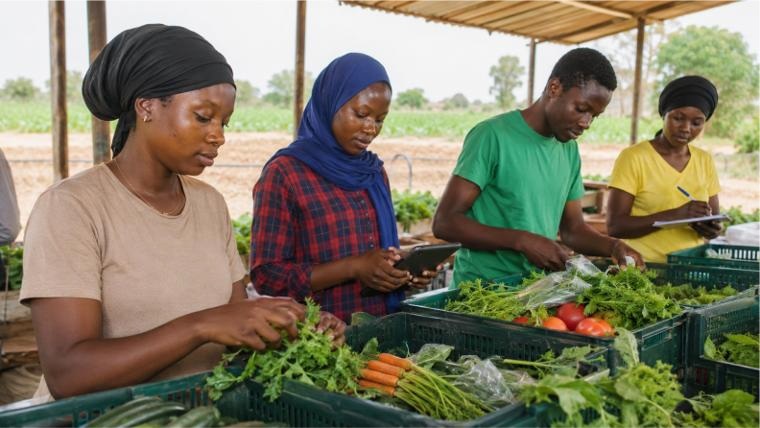
The Gambia has one of the youngest populations in Africa, with around 70% of its citizens under the age of 35. While this represents enormous potential for the country’s future, it also highlights the need to create meaningful education, training, and employment opportunities for young people.
Agriculture remains the backbone of the Gambian economy, providing livelihoods for much of the population. Yet the sector is undergoing significant transformation as climate change, technological innovation, and changing market demands reshape the way food is produced and distributed. These changes are creating new opportunities for young people beyond traditional farming.
Today, agribusiness encompasses a wide range of activities, from sustainable crop production and food processing to digital agriculture, logistics, marketing, and entrepreneurship. As a result, employers increasingly need professionals with green and digital skills that can support a more sustainable and competitive agricultural sector.
However, many young people still face barriers to accessing training that reflects the realities of the modern labour market. Strengthening Technical and Vocational Education and Training (TVET) is therefore essential to equip learners with the skills needed for emerging jobs and business opportunities.
This is one of the key goals of the AGREEN GAMBIA project. By strengthening the capacity of TVET institutions and promoting Climate-Smart Agriculture, the project aims to better connect education with labour market needs while supporting sustainable rural development.
Through improved training programmes, stronger links between education providers and employers, and a focus on green and digital competences, AGREEN GAMBIA seeks to help young people develop the skills needed to build successful careers, create businesses, and contribute to a more resilient and sustainable future for The Gambia.